What To Do in Mexico City
What To Do in Mexico City
Mexico City is a place that has endless possibilities to experience and explore. There are countless museums and archaeological sites, there is such a rich history to learn about and the food (especially street food) would take a lifetime to experience.
As such, I have made a shortlist of my favourite “things to do in Mexico City”, but this is by no means exhaustive or complete. You could spend a month in the city and not do any of these, and still have an amazing time.
For the experiences that require more information, I will provide more detail on a linked page.
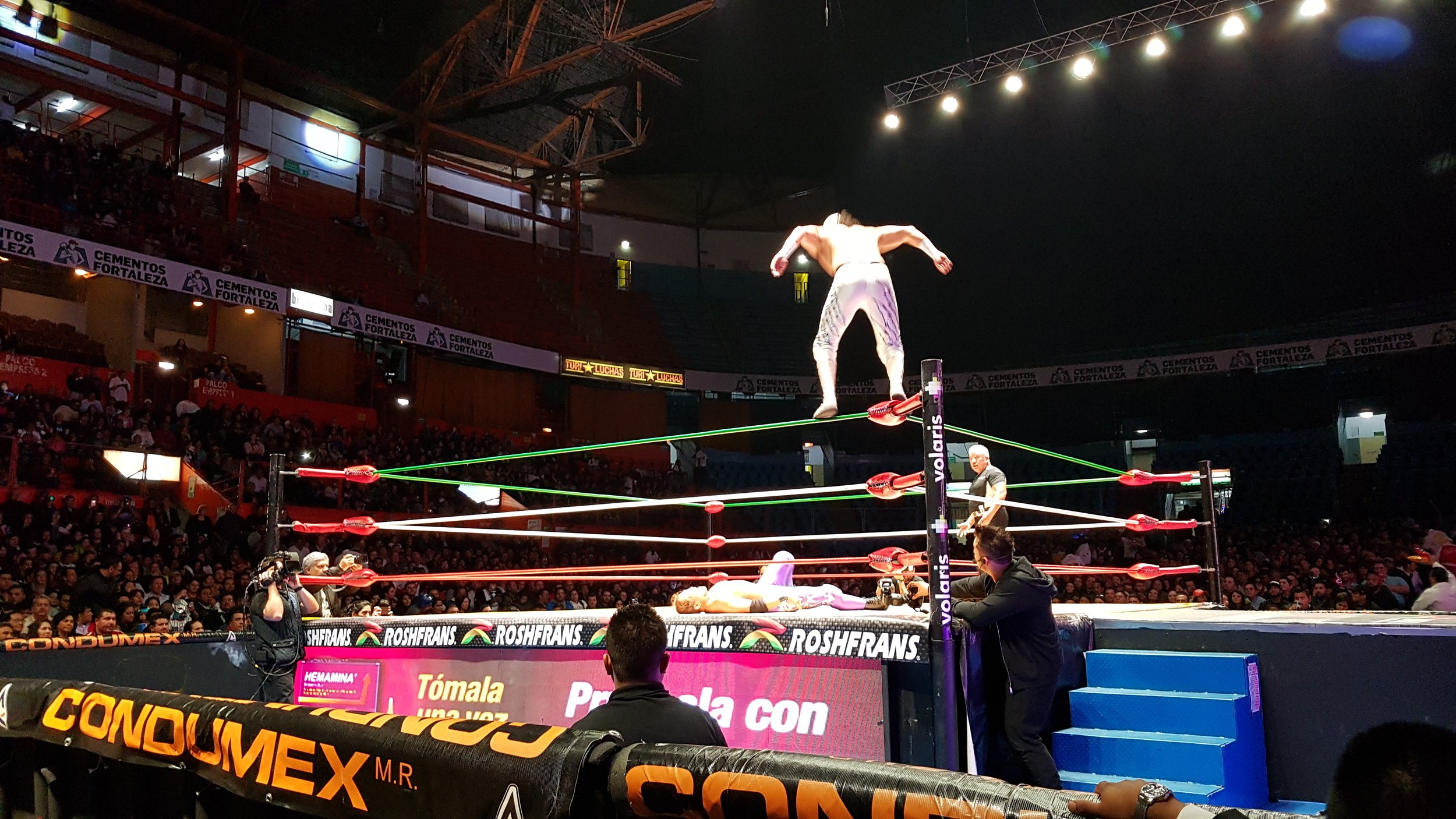
Lucha Libre at Arena Mexico
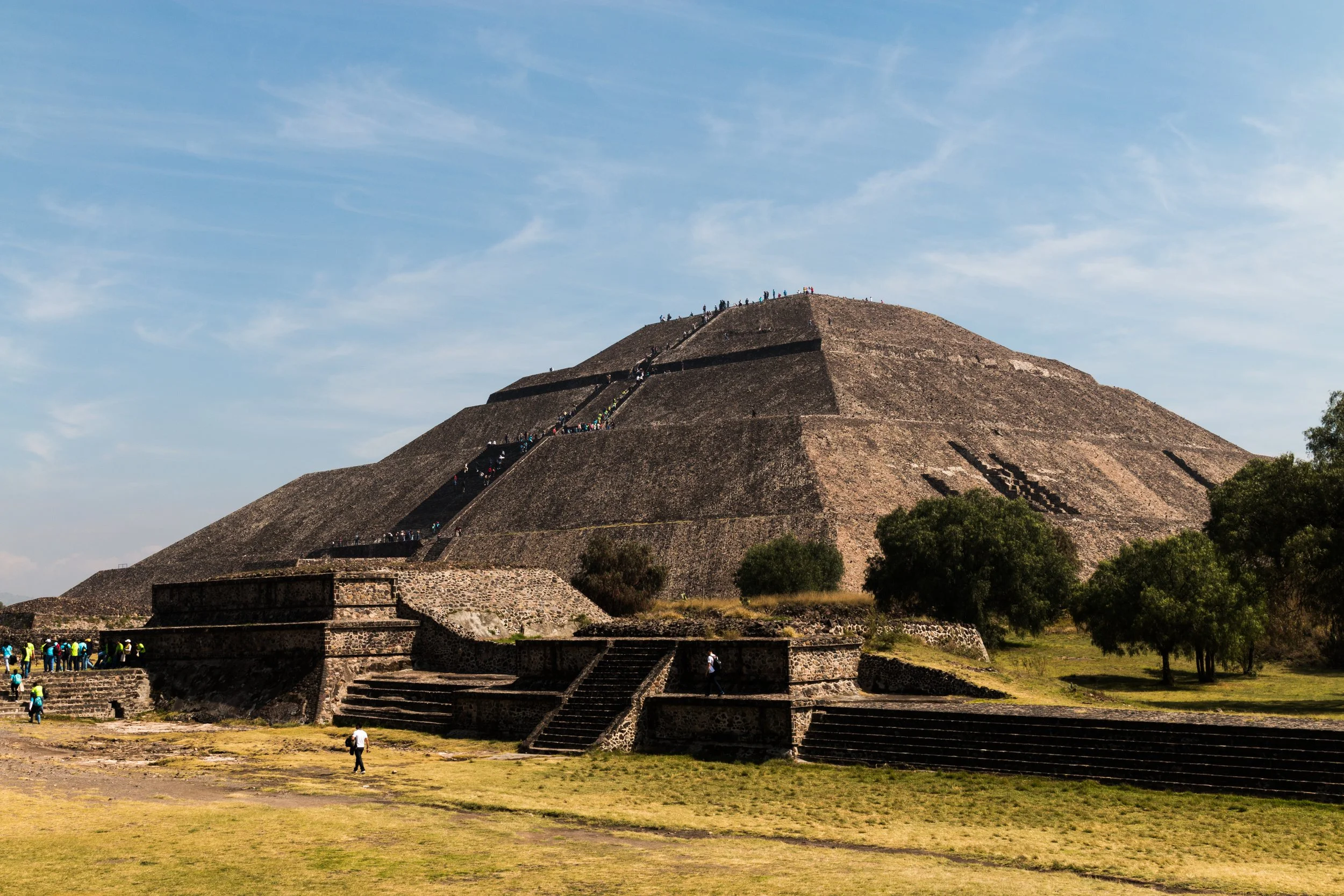
Teotihuacan Pyramids
Tenayuca Pyramid
Santa Cecilia Acatitlan Pyramid
National Museum of Anthropology (Museo Nacional de Antropologia)
Xolchimilcho and La Isla de las Muñecas (The Island of the Dolls)
Chapultepec Park (Bosque de Chapultepec)
Chapultepec Castle (Castillo de Chapultepec)
Templo Mayor
La Ciudadela Market (Mercado de Artesanias La Ciudadela)
La Merced Market (Mercado La Merced)
Museo Mucho - The Chocolate Museum
Frida Kahlo Museum and Exhibitions at the Museo de Arte Moderno
Various Galleries, Museums and Exhibitions
Concerts and Music Festivals

Tenayuca Pyramid
Unlike the exceptionally popular Teotihuacan, there are a couple of lesser known pyramids within the limits of Mexico City that are worth visiting. They are not as impressive, but are also much easily accessed. These are Tenayuca and Santa Cecilia Acatitlan (below).
If you are making the journey to Teotihuacan via the buses at Autobuses del Norte, once you return you are perfectly located to grab an Uber (or other transport) to Tenayuca. Santa Cecilia Acatitlan is then only slightly further away, and easily doable in one day.
The pyramid complex has an adjacent museum showing the history of the excavations and various artefacts discovered there. You aren’t able to climb the pyramid, but that does not take away from the experience of its impressive design. The pyramid complex has many snake references and is very unique in style. I would easily suggest an hour or two are completely worth putting aside to visit. There is often a small market just outside the complex if refreshments are needed.
Santa Cecilia Acatitlan Pyramid
The Santa Cecilia Acatitlan site is beautiful in itself. You approach the pyramid complex through the trees and the mystique is palpable. There is a museum on the grounds outlining the history of the site and excavations. Many of the structures in the complex were broken down, so the stones could be used to build the nearby church. The site is smaller than Tenayuca, but worth putting aside an hour to explore.
https://mexicocity.cdmx.gob.mx/venues/acatitlan-pyramid-museum/
National Museum of Anthropology
There is a very good reason why this is one of the highest rated things to do in Mexico City. It's simply overwhelmingly stacked full of exhibits.
Tickets are bought at the entrance, there is a coatroom for bags, and a gift shop with great books and various souvenirs.
The museum is a two-leveled U-shape with a fountain in the middle. Head to the right and start on the lower level. This is start of the museum, with the earliest history of Mexico. Upstairs at this point is more modern history from Spanish colonialism onwards.
I, like most people I think, found the lower level the most interesting. From the prehistoric animals through the Olmec period, the stones of Teotihuacan and through the Aztecs. From giant stone carvings to the smallest most intricate gold jewellery, the wealth of history is worth hours of your time. The most important, in my opinion, is the Aztec Sun Stone.
There are so many different facets covered, from prehistoric animals to domestication of different foods (maize especially) to giant historical civilisations and more modern traditions.
I found myself stuck behind a large Russian tour group at one point. As I could not understand what was being said, I chose to leave where I was and go upstairs for a while, before returning. Tour groups and school groups were going through the museum the whole time that I was there, but they weren't overwhelming. It is easy to avoid them for the most part.
Many of the rooms holding the exhibits are dark, so be aware of that if you are looking to take photos. I chose a rainy day to visit, which was perfect.
I have always said that you need a minimum of four hours to explore this museum. Potentially five or more. I found the ground level to be the most interesting, for sure, but the colonial history of the upper level and how the societies intertwined is also somethign worth exploring.
Floating Gardens of Xochimilco and La Isla de las Muñecas (The Island of the Dolls)
The canals are some of the last remnants of pre-hispanic Mexico city. Tenochtitlan and later Mexico City were built on swampy islands and reclaimed land. The basis of farming to feed the masses of these cities became “chinampas” or floating gardens. The gardens were formed by hammering juniper poles into the canals to create a scaffolding, then dumping earth into the structure until it displaced the water and became a reclaimed island. The water and fertile floating islands provided crops for the populations, and even continues to this day to a lesser extent.

The canals are traversed by boarding colourful canal barges called “trajineras”, all with their own unique names and patterns. There are numerous launching points, called Embarcaderos, and various advice regarding the best locations and also times and days.
On my first visit in 2019, I chose to depart from Embarcadero Nuevo Nativitas Xochimilco. I took the metro to Universidad, and took an Uber to the Embarcadero as I was traveling with multiple people. I read instructions regarding the light rail from the metro, but we decided in the essence of time that an Uber would suffice. Interesting to note, the driver told us to ensure our doors were locked and not to open our windows on the journey, as there were motorcycle gangs looking to snatch phones and bags on those streets.
I had limited time during this trip, and I ended up only having Sunday morning free. I had read that Sunday was the worst time to go, due to the influx of locals causing boat traffic, but I wouldn’t let that sway your decision. Due to timing, and a delayed start, we arrived at 12:00 and chose to only have an hour on the boat. As many people have noted, a good amount of time is spent getting out of the boat traffic. For a true experience I’d suggest at least two hours, and if you are wanting to visit the island of the dolls an hour won’t suffice. Around the Embarcadero you’ll see many references to Axolotls (Mexican walking fish), often in cartoon form. This is a main location of Axolotls in the wild, and although you’re unlikely to see any, they are there.
We walked to the Embarcadero and simply asked for a boat for an hour. The price of MXN500 per hour was standard (in 2019), and although apparently open to negotiation, I chose to simply pay the asking price. We walked across the parked barges to the boat that we were taking and set off. We had our own boat for the four of us and weren’t pushed to join other people. The journey involved being punted North along the canals, weaving in and out of the barges moving slowly North and South. We were joined by a dog for a while, who then made his way to other barges when we collided (gently) and then eventually made it to dry land.
We past trajineras with full mariachi bands playing (for cash) and enjoyed witnessing the different songs as we weaved between the craft. We were asked if we wanted to hire any, and we declined. As we floated, we were approached by canoes selling food and drinks. I purchased a cob of corn (elotes), but there were numerous other options. You are able to stop and get off at various islands if you desire. There are islands growing flowers, available for purchase, but we were happy to just float. We tipped our young captains as they were fun and great translators, and genuinely took good care of us.
La Isla de las Muñecas (The Island of the Dolls)
I had seen La Isla de las Muñecas (The Island of the Dolls) on a few TV shows over the years, including on Anthony Bourdain’s No Reservations (s05E01), and had read enough to know it was an experience I wanted to have.
As per advised, we headed to the Embarcadero Cuemanco via a metro ride to Lomas Estrella station followed by a quick uber trip. When I repeated the trip in 2022, we just took an uber from our hotel due to time and comfort for our group.
Once arriving at the embarcadero, I found the information booth with the tour lists and prices, explained that I wanted to visit La Isla de las Muñecas. I was posed with a question at this point if I wanted to go to the “real” island or the “pirated” version, which is a new homage being built a lot closer to the embarcadero for shorter trips. I chose the original island, which was a 5 hour trip. Of course, this depends on how long you spend on the island and how many extra stops you take, if any.
The original island and the fake one are both on google maps so you should be able to ensure that you are taken to the correct one. There was even a third island with some dolls that I noticed in 2022.
The legend of La Isla de las Muñecas revolves around the original owner, by Don Julián Santana Barrera, who became obsessed with the drowning death of a young girl who became entangled in water lilies. He claimed to have heard her calling for her doll. After this traumatic experience, dolls began to appear on the island. The Don Julián Santana Barrera became obsessed with curating the dolls and dedicated his life to the island. His descendants now run the island.
Local legends say that the dolls can be heard whispering to each other, calling to local boat to visit the island and moving their arms and opening their eyes.
The price for the 5 hour punt round trip to the island was MXN3000 in 2022 (up from MXN2500 in 2020). The journey is slow and relaxing. Ensure that you have water and let your captain know if you wish to stop at any of the random islands along the way. Depending on the day and time, there will be other boats offering fruit, corn and drinks. Alcoholic drinks used to be sold, but they were restricted due to the amount of people drunkenly falling in the water (I was told).
Our trip took about an hour to get to the island, but we were one of three trajineras heading out that afternoon. Busier times will take longer to get away from the crowd.
Once arriving at The Island of the Dolls, you are charged entry to the island (I think it was MXN45 each). You can then walk around, admiring the terrifying dolls and see old photos of Don Julián Santana Barrera with his island. There are often a couple of dogs to say hello. There is a toilet and a little refreshment stand with drinks and alcohol (including home distilled spirits).
A normal person likely needs 30 to 60 minutes, depending on the level of interest and uneasiness.
Once you have seen all the dolls, making sure to see the original doll, you can leave the island and head back on the boat. The journey back is about an hour and change. Be on the lookout for snakes swimming. Before the last straight stretch to the embarcadero, there is a larger open area often populated by pelicans.
If you were happy with your journey, you can tip your guide.
Chapultepec Park (Bosque de Chapultepec)
Chapultepec Park/Bosque de Chapultepec is one of my favourite parts of Mexico City. I chose my hotel for proximity to the park and the metro, as well as attractions. Due to the proximity, I spent most afternoons walking around the park when I had spare time. Sundays are popular and vibrant, but there is always something going on every day of the week.
The park is huge, and that should be accounted for when walking. I tended to walk to the park along Avenue Chapultepec, often stopping for the best takeaway gorditas at Las gorditas de Sevilla. I’d walk past the chicken and taco stands outside the Chapultepec Metro station, and enter the gates to the park there.
The entrance to the park here had hawkers selling sandwiches, people playing 3-card-monty and a strange scam/magic act using a finch and a selection of paper notes (I was yelled at for taking a photo). I would walk along further into the park, then turn left and walk over the bicentario and into the park proper. This area of the park had various performances going on over the time I visited, as well as information events/conferences and educational stands for student. To say the park space is well-used is an understatement. The squirrels run through the crowds, looking for food. The bridge is spotted with statues and offers a great view of the monument to the Niños Héroes (Altar a la Patria).
The monument stands tall and is often busy, so getting a great photo can be hard. The late afternoon was the best time in my opinion. If you continue past the monument, you come to the base of the Chapultepec Castle. This is where the Mexican grey/red-tailed squirrels are in abundance, and many photo opportunities abound.
If you bear right, from the base of the castle, you walk into an avenue market. The sellers offering cheap tourist items from lucha libre masks to disposable cameras to selfie sticks to hats and sunglasses. But the standout is the food. The various potato chips and chicharrones, the ice cream, nuts and fruits. I can suggest trying a chicharron more, with hot sauce. There is also fresh fruit and juice (and more fruit just outside the park next to starbucks)
The public toilets cost 4 pesos to enter, so remember to bring coins if you aren't near any better facilities.
Throughout the park are small open-kitchen cafes. Various staff walking around with menus, beckoning for you to take a seat on the small plastic tables. Unlike the street food elsewhere, I didn’t find these places worthwhile financially and quality-wise.
Along the avenue are the lakes. Paddleboats and kite flying. Turn right before lakes to take you to a bookstore café and starbucks as well as the park exit next to the entrance to the Museo Nacional de Antropología/Anthropologie Museum. If you continue past the lakes, and turn right, you come to the zoo which is free (no need to pay to store your bags either). The standout attraction of the zoo is the pandas, and so the markets sell a large amount of panda toys.
The park has endless avenues and paths, and so much green space. The birds throughout the park are worth paying attention to. Oddly, one of the most striking is the Mexican grackle/great tailed grackle, a blue-sheened blackbird.
I felt no issues with safety, even walking around with my SLR. The hawkers were not pushy and very helpful (especially with my terrible Spanish). I can’t suggest a better way to spend a quiet afternoon.
Chapultepec Castle (Castillo de Chapultepec)
The castle is perched on the top of a hill in Chapultepec Park overlooking the city. The grounds have a long history and it’s worth reading before you visit. The castle itself has a museum contained in half the building. There is art, furniture, clothing, carriages and full rooms laid out. It’s fascinating as a view into historical Mexico. But that’s not why I would suggest visiting.
There is a beautiful stained glass window and a pretty garden on the roof of the building. Both are worth seeing and taking photos. The art throughout the building is worth taking time to look at.
But the main reason to visit, by far, is the view. The museum part of the castle shouldn’t take more than an hour to go through (potentially half that). The view, however, has to be taken in from all sides. Overlooking the park, overlooking the city then overlooking the fountain. From the bottom floor and up on the roof. Take in the gardens, don’t be afraid to go back through if you miss something.
Enjoy the walk back down to the park.
Templo Mayor
The Temple Mayor complex is separated into two parts, the temple excavation area and the attached museum. The history of how the remains of the temple was discovered (and raised public interest) is outlined at the site. The location is right in the middle of modern buildings in Mexico City, making the experience even more surreal.
The entrance leads into the excavation site via a coat check. A lot of the information is only in spanish, while some placards are bilingual. The excavation grounds are worth taking your time to walk through.
The Museum is much larger than it appears from the outside. It has multiple levels and lots of artefacts. Unlike the Anthropology Museum, there were fewer exhibits and I didn't feel the need to spend anywhere near as much time.
La Ciudadela Market (Mercado de Artesanias La Ciudadela)
My page on Mercado de Artesanias La Ciudadela
La Merced Market (Mercado La Merced)
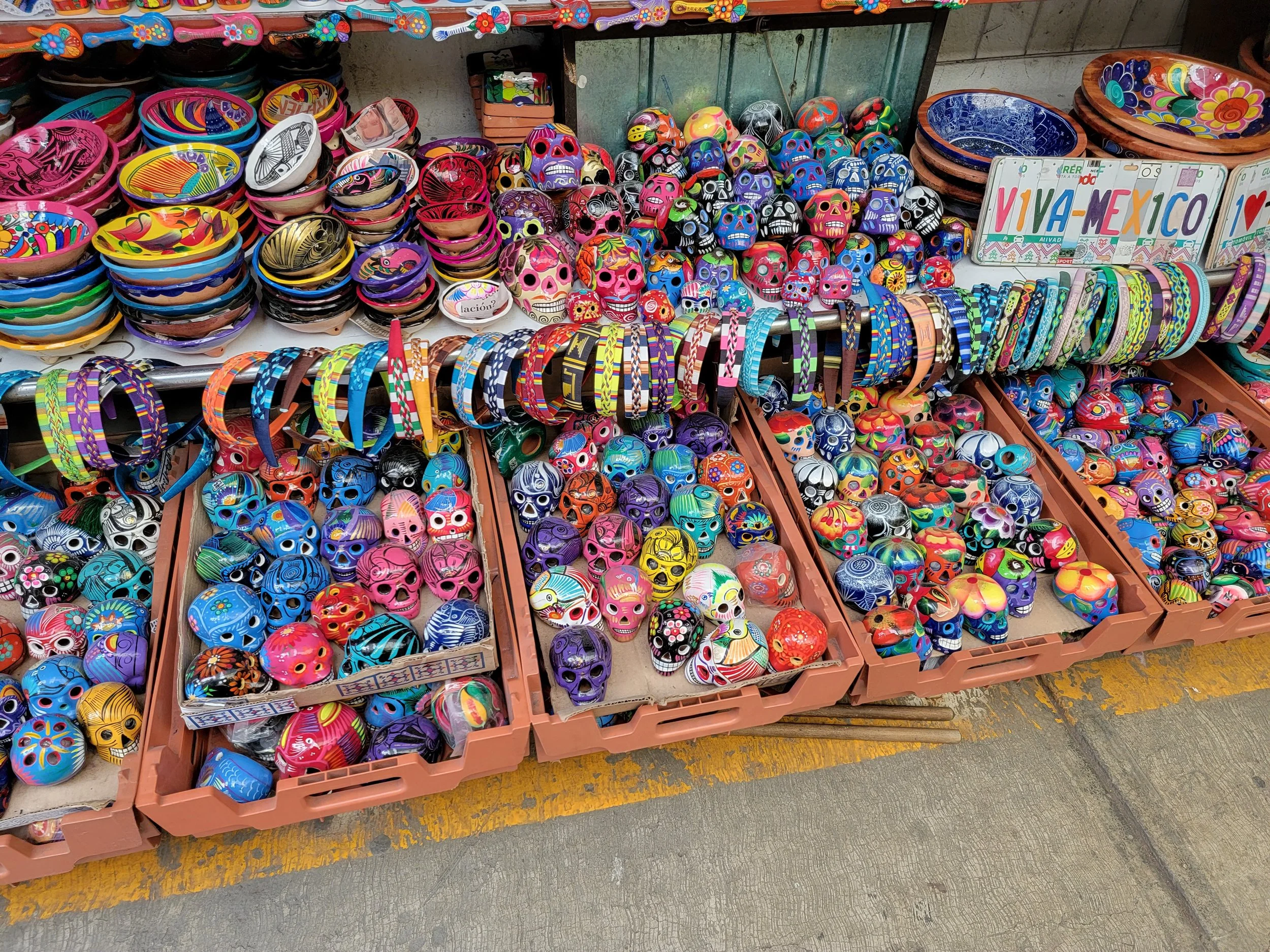
Mercado la Merced is the largest market in central Mexico City. The market itself is what you would expect from the city’s main market, with everything from produce to clothing to meat to toys to piñatas all available. The market is a huge sprawling maze, with endless passages and lanes, bustling with people.
It should be noted that the area is known as a bit of a hotbed for petty crime, especially pickpocketing. I never felt any concern there, at least no more than I feel in any large city, but this is one of the locations that many people will warn tourists to avoid. I think it is worth visiting for the amazing variation of items on display and to buy avocados!
Museo Mucho del Chocolate - The Chocolate Museum
A somewhat overpriced museum dedicated to the history of chocolate. It’s quite small but well put together and very modern. The various rooms and levels take an hour at most to walk through, but honestly could be a comfortable 30 minutes. The etching art and the photography displays of the history of chocolate production in Mexico are worth viewing. The museum covers chocolate use from pre-Columbian times through to the modern world trade
The museum also hosts a number of fossils, both flora and fauna, with a few dinosaur bones. There is a cocoa zen box to rake patterns as well as a room to smell flavouring smells. The museum contains historical processing equipment from manual methods to machinery.
But probably the best part, besides the smell of chocolate throughout the building, is the gift shop. So many unique flavours, from sea salt chocolate to chilli chocolate, pulque to mezcal, tequila to lemon! The single chocolates are beautifully crafter, but I found that the chocolate bars travelled better for souvenirs. You don’t need to go through the museum to visit the store, there is a separate entrance on the street.
Frida Kahlo Museum and Exhibitions at the Museo de Arte Moderno
Frida Kahlo Museum
I have yet to make it to the Frida Kahlo museum, through busy schedules of eating and music festivals. But this is a “must do” for many tourists. I will eventually get there, for certain!
https://www.museofridakahlo.org.mx/
Museo de Arte Moderno
https://inba.gob.mx/recinto/45
The Museum of Modern Art is more centrally located and is often favoured over the Frida Kahlo Museum due to the extensive Kahlo collection on display there.
Various Galleries, Museums and Exhibitions
Mexico City is home to seemingly endless galleries and popup exhibitions in museums. I was lucky enough to be in town for the HR Giger popup exhibition, which was insanely well put together.

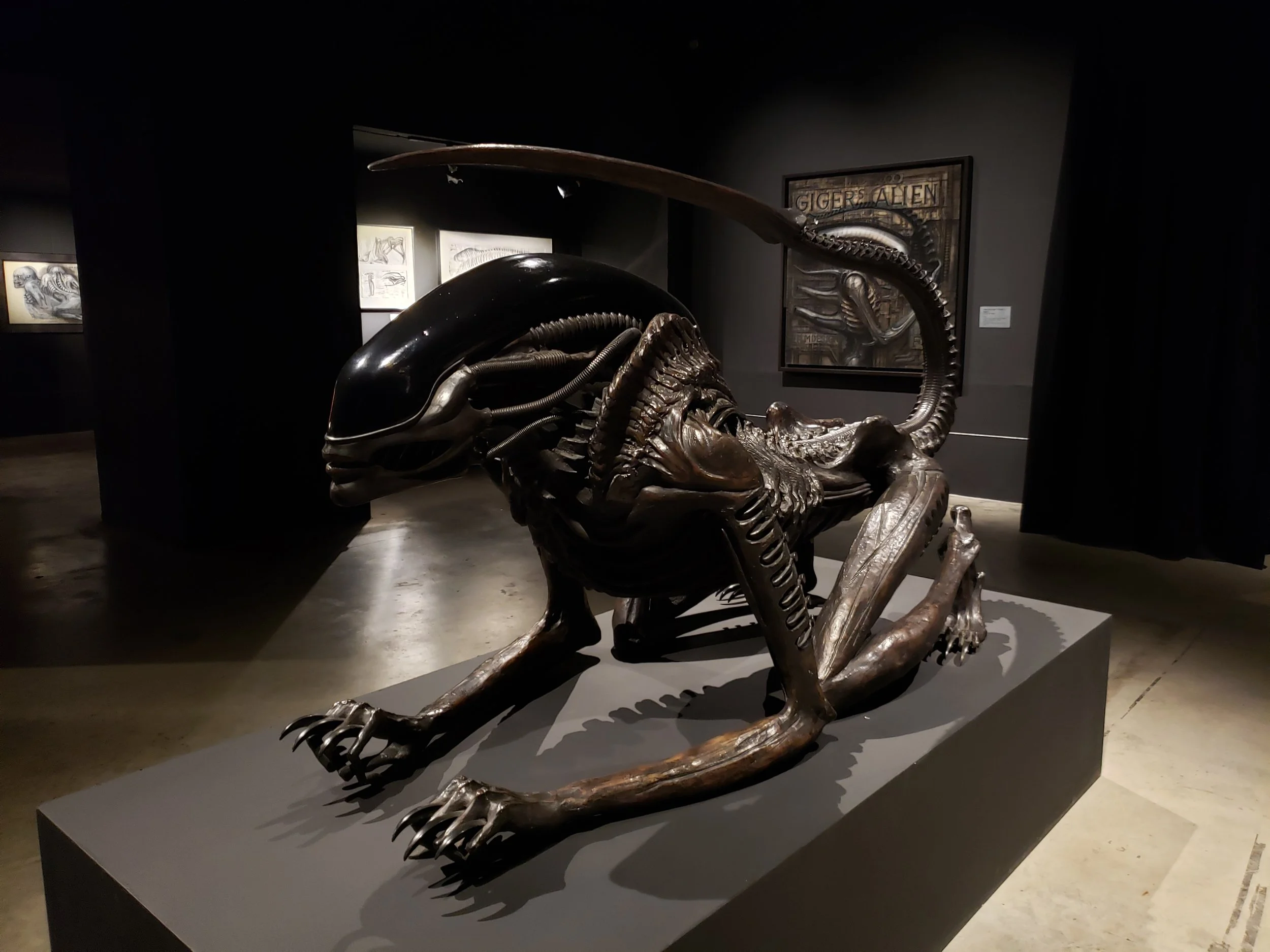
Mexico City is home to seemingly endless galleries and popup exhibitions in museums. I was lucky enough to be in town for the HR Giger popup exhibition, which was insanely well put together.
Various websites will have lists of galleries, such as:
Museo Anahuacalli
Highly suggested museum with stunning architecture, much of it built with volcanic rock.